
How to Register Health Supplements in Singapore: A Complete Guide (2026)
Singapore is the fastest market entry for health supplements in Southeast Asia. While Vietnam, Thailand, Malaysia, and Indonesia require three to nine months of mandatory registration before a single unit can sell, most supplement brands can ship into Singapore and begin fulfilling orders immediately. There is no mandatory pre-market registration for the majority of health supplement products.
That speed advantage is real, but it is not unconditional. Singapore has two separate regulatory bodies covering supplements, a list of restricted and prohibited ingredients, strict label requirements, and channel restrictions that catch foreign brands off guard. Getting those details wrong does not just delay your launch it can mean a customs hold on goods that have already arrived.
This guide covers every step: HSA versus SFA classification, voluntary listing, label requirements, restricted ingredients, the import process, and how Singapore compares on cost and timeline across the region. If you want to see how this plays out for a real brand, read our Singapore supplement market entry case study alongside this guide.
HSA or SFA: Which Regulator Covers Your Product?
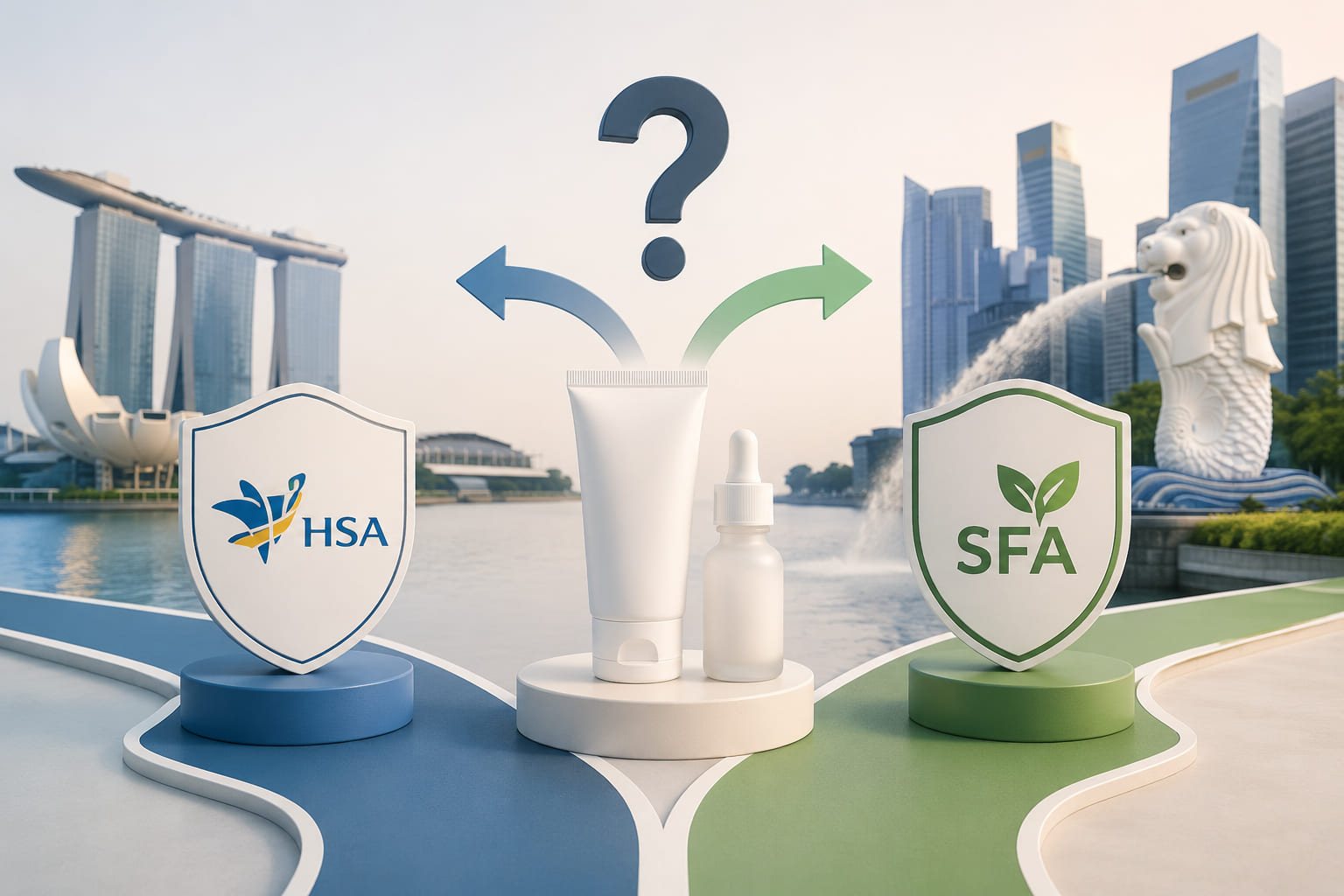
Before you look at registration, listing, or labels, you need to answer one question: which regulatory body governs your product? In Singapore, health supplements do not fall under a single authority.
The Health Sciences Authority (HSA) regulates supplements in dosage form: capsules, tablets, pills, and softgels. If your product is presented in one of these forms and carries a health or function claim, it falls under HSA.
The Singapore Food Agency (SFA) regulates food products – and that includes any supplement presented in food form, such as a powder, liquid, or sachet, even if it carries a health or function claim. A turmeric capsule with a joint health claim goes to HSA. The same turmeric in a powder sachet making the same claim goes to SFA, because Singapore treats the powder as food regardless of the claim on the label. SFA also covers special purpose foods: infant formula, sports nutrition, and weight management products.
Getting this classification wrong before filing is one of the most common and costly mistakes brands make. The regulatory body determines which import permits you need, what label rules apply, and what compliance steps are required before your shipment arrives.
| Product type | Health/function claim? | Governing body | Import permit required? |
| Capsule / tablet / softgel | Yes or No | HSA | No (for most categories) |
| Powder / liquid / sachet | Yes or No | SFA | Yes, before shipment arrives |
| Special purpose food sports nutrition, weight management, infant formula |
Yes or No | SFA | Yes, before shipment arrives |
| Traditional Chinese medicine herbs (dosage form) | N/A | HSA (separate framework) | Case by case |
If your product falls under SFA, the import permit must be in place before your shipment arrives in Singapore. Applying after the goods have landed creates a customs hold that is expensive and time-consuming to resolve.
| GOL Insight: The classification step most brands skip |
| When we ran a market entry for a Southeast Asian DTC brand with 19 supplement SKUs, classification was the first thing we did before any label work, before any shipping plan. Two of the 19 products were flagged before a single dollar was spent on compliance. One contained a restricted ingredient. One had a channel restriction that made the client’s planned distribution model unworkable. |
| Most brands skip classification and go straight to label review. Read the full study case how GOL Solution support this supplement brand enter Singapore |
HSA Voluntary Listing: What It Is and When You Need It
For products under HSA’s jurisdiction, listing is voluntary. You are not required to list your supplement with HSA before selling it in Singapore. But voluntary does not mean optional compliance. Every supplement sold in Singapore must meet HSA’s requirements for permitted ingredients, dosage limits, and label claims whether or not you have listed the product.
Voluntary listing means you choose to submit your product information to HSA’s Health Products Regulation Group and receive a listing number. HSA reviews the submission and, if approved, issues a listing reference. The processing time is 60 working days.
When voluntary listing makes sense
Listing is not mandatory, but it is strategically important in several situations:
- Major retailers and pharmacy chains in Singapore frequently require a listing number before they will stock a product. If your distribution plan includes physical retail, voluntary listing is effectively a commercial requirement.
- A listing number gives you a written record that HSA has reviewed your product. If post-market surveillance raises a question about your product, a listing reference is the strongest evidence you have.
- Brands building a long-term Singapore presence often list proactively to reduce post-market risk.
GOL can manage the voluntary listing submission on your behalf. For current processing timelines and service details, contact us directly fees and submission requirements are subject to change as HSA updates its processes.
| GOL Insight: What ‘voluntary’ really means in practice |
| We see the same misread regularly: a brand discovers that HSA listing is voluntary and concludes that Singapore has no real rules. That is the wrong conclusion. HSA listing is voluntary. HSA compliance is not. The ingredient restrictions, dosage limits, and label claim rules apply to every product sold in Singapore. Voluntary listing is the mechanism for getting your product formally on record not the mechanism that creates compliance obligations. |
Restricted and Prohibited Ingredients: What Cannot Enter the Market
Singapore maintains a list of prohibited and restricted substances for health supplements. Some ingredients cannot enter the market at all, regardless of dosage or format. Others can be used but only within specific concentration limits or product categories.
Berberine: the most common misunderstanding
Berberine is one of the ingredients we are asked about most often. The answer is specific: berberine as an isolated, standardised ingredient cannot be imported or sold in Singapore as a health supplement ingredient. It is restricted.
The confusion usually comes from a legitimate HSA communication that permits traditional Chinese medicine herbs which naturally contain berberine to be sold. Those are treated under a separate framework. The permit for TCM herbs does not extend to berberine as a named, standardised supplement ingredient. The two are different under Singapore’s regulatory structure.
If your formulation lists berberine as an ingredient, it cannot enter the Singapore market.
Melatonin: a channel restriction, not a product ban
Melatonin is permitted in Singapore. The restriction is on channel. Melatonin supplements can only be sold through licensed pharmacy distribution. They cannot be listed on general online marketplaces or sold through a DTC website.
For brands planning to sell through Lazada, Shopee, or their own website, melatonin is not a viable Singapore SKU under current regulations.
What to do if a competitor is listing a restricted product
We are regularly asked why a competitor is listing berberine or another restricted ingredient on Lazada if it is not permitted. The honest answer: we do not know their registration status. Because HSA listing is voluntary, some sellers list a product and take their chances with post-market surveillance. They may never be flagged. They may face a recall next month.
We do not recommend that path for brands building a regional presence. A recall or agency action at the start of a market entry is a brand problem, not just a compliance problem.
How to check your formulation before committing to labels or freight
The HSA Health Products Regulation Group publishes its prohibited and restricted substance lists. Review your full formulation against those lists before any label printing or shipment planning. If any ingredient is ambiguous particularly proprietary ingredient names or herbal extracts verify with HSA directly before proceeding.
| GOL Insight: Getting HSA’s position in writing |
| In the case study referenced in this article, one of the client’s products used a proprietary name that implied a physiological function. Published HSA guidelines did not clearly resolve whether the name itself crossed into therapeutic claim territory. Rather than give the client our interpretation, we submitted the specific product name to HSA directly and got their position in writing. |
| HSA confirmed no further action was required. The client kept that correspondence as part of their compliance records. If an audit happens or a retailer asks for documentation, a written response from the regulating agency is the strongest evidence available. It is not a registration. It is better: it is a defensible record that most brands do not have. |
Label Requirements for Singapore Health Supplements
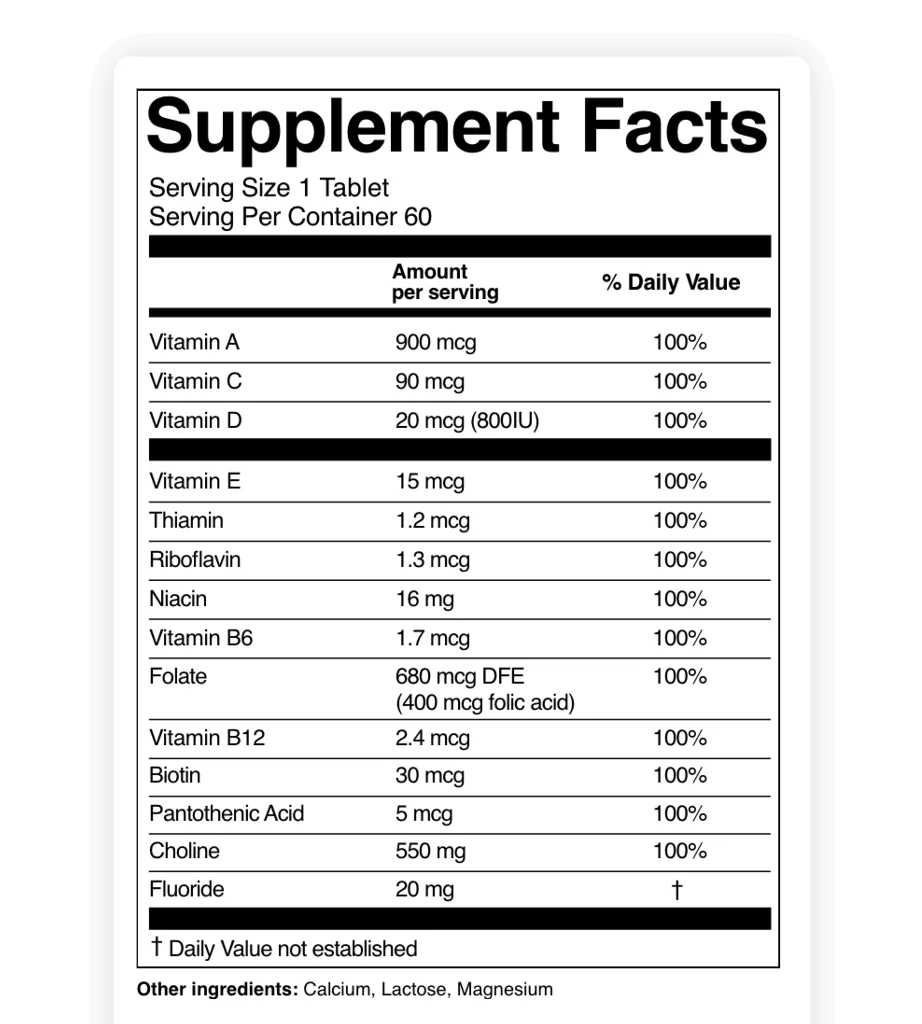
Label compliance is where most foreign supplement brands encounter problems not because Singapore’s rules are unusually strict, but because the requirements differ from home-country standards in ways that are not obvious until you read them carefully.
What must appear on a Singapore supplement label
Per HSA Guidelines Table 1, the following matrix summarises what information is required on each label type:
| Information | Outer Label | Inner Label | Small/Strip/Blister | Leaflet |
| Product Name incl. Brand Name | ✓ | ✓ | ✓ | ✓ |
| Dosage Form | ✓ | ✓* | N/A*** | ✓ |
| Name & Qty of Active Ingredients | ✓ | ✓ | N/A*** | ✓ |
| Intended Purpose | ✓ | ✓ | N/A*** | ✓ |
| Dosage & Directions of Use | ✓ | ✓ | N/A*** | ✓ |
| Batch Number | ✓ | ✓ | ✓ | N/A |
| Expiry Date | ✓ | ✓ | ✓ | N/A |
| Country of Manufacture | ✓ | ✓* | N/A*** | N/A |
| Name & Address of Importer/Owner | ✓ | ✓* | N/A*** | N/A |
| Contraindications, if any | ✓ | ✓* | N/A*** | ✓ |
| Warnings, if any | ✓** | ✓* | N/A*** | ✓ |
| Storage Condition | ✓ | ✓* | N/A*** | ✓ |
| Pack Size / Net Content | ✓ | ✓* | N/A*** | ✓ |
* May be omitted if the product is supplied with an outer label.
** May be omitted if the accompanying product leaflet provides this information.
*** The small label, strip or blister pack label should minimally display the product name, batch number and expiry date. In such instances, the full product information should be displayed on the label of an accompanying outer carton box.
The percentage daily value problem
This is the most common label error we see from brands entering Singapore from other parts of Asia. The ingredient quantity is identical to what appears on the home-country label. The percentage daily value shown is wrong.
Singapore’s Recommended Dietary Allowances differ from those used in many other markets. Every label that shows a percentage daily value needs to be recalculated against Singapore’s specific figures before printing. Printing labels without this step and then reprinting after the fact is an avoidable cost.
Therapeutic and treatment claims
HSA draws a clear line between health claims and therapeutic claims. Health claims supporting immune function, maintaining joint health, contributing to energy levels are permitted on supplement labels with appropriate substantiation. Therapeutic claims like treating arthritis, preventing infection, managing a medical condition require drug registration, not supplement listing.
Labels that cross this line need revision before the product can proceed. The revision is not always obvious: the distinction is sometimes in a single word, and some proprietary product names imply treatment in ways that are not immediately apparent.
The Import Process: Permits, IOR, and What Must Happen Before Your Shipment Arrives
For HSA-regulated supplements, most products can enter Singapore without a pre-market import permit. For SFA-regulated supplements, the import permit must be in place before your shipment arrives.
SFA import permits
SFA import permits are product-specific and shipment-specific. You apply through SFA’s online portal. The permit covers the specific products being imported, their quantities, and the shipment details. Applying for permits after goods have arrived creates a customs hold goods cannot be released until the permit is issued.
Importing without a Singapore entity
Foreign brands without a registered Singapore company cannot be the importer of record directly. You need a locally registered entity to handle customs clearance. GOL’s Singapore market entry service includes Importer of Record (IOR) we act as the local entity for customs purposes, managing the import permit process and coordinating with freight forwarders. This means you can begin selling in Singapore without incorporating a local company.
Singapore vs the Rest of SEA: Timeline and Cost
The common assumption is that Singapore, as a developed market, comes with developed-market pricing and timelines. For supplements, the data contradicts this. Singapore is not just the fastest SEA market for supplement entry it is frequently the least expensive.
Supplement registration timeline by market
| Market | Timeline to market entry |
| Singapore | Immediate (for most HSA-regulated supplements) |
| Vietnam | 3-4 months |
| Thailand | 3-4 months |
| Indonesia | 3-4 months |
| Malaysia | 6-9 months |
Source: Singapore Market Entry Strategy: Why Marketplace Winners Use Singapore as Their SEA Hub
Compliance cost comparison 10 SKUs using Importer on Record
| Market | Estimated cost (10 SKUs, IOR) | Timeline |
| Singapore | ~USD 3,500 | 14-30 days |
| Vietnam | USD 4,000-5,000 | 14-30 days |
| Malaysia | ~USD 8,000 | 14-30 days |
| Thailand | ~USD 10,000 | 2-4 months |
| Indonesia | Varies | 3-4 months |
Source: Singapore Market Entry Strategy: Why Marketplace Winners Use Singapore as Their SEA Hub
Singapore emerging as both the fastest and most economical option is a structural advantage. A brand that clears Singapore first can begin generating revenue from that market while compliance work for Malaysia, Thailand, and Vietnam runs in parallel. That parallel structure Singapore first, other markets in progress is how brands with limited compliance budgets sequence a SEA rollout without stalling at the starting line.
| GOL Insight: How the 19-SKU client used Singapore as a regional hub |
| When we ran the classification assessment for a Southeast Asian DTC supplement brand expanding to four markets simultaneously, the comparative view made the sequencing obvious. Singapore cleared fastest. The client began fulfilling Singapore orders while compliance work for Malaysia, Thailand, and Vietnam was still in progress. The full Singapore market entry from classification through label review, agency consultation, and customs clearance readiness was completed in under three months. |
When This Approach Does Not Apply
The classification-first, label-second process described in this article works well for brands with a finalised SKU range and a clear distribution channel strategy.
It is less suited to brands that have not yet finalised their formulations. A label review is only valid for the specific formulation and claims that were reviewed. If the formulation changes after the review, the label review needs to be repeated.
It also requires willingness to act on what classification reveals. In the 19-SKU case study, two products were removed from the Singapore launch plan entirely. Brands that are not prepared to adjust their SKU list or revise claims will either stall the process or proceed with unresolved compliance risk.
Finally, if your product category requires SFA import permits, those permits must be in place before your shipment arrives. This is not a step that can be completed in parallel with customs clearance.
Frequently Asked Questions
Do I need to register my supplements with HSA before selling in Singapore?
For most health supplements, no. HSA listing is voluntary. You are not required to list your product before selling, but your products must comply with HSA’s requirements for permitted ingredients, dosage limits, and label claims regardless. Certain ingredients are prohibited whether or not you have any registration. The voluntary listing process takes 60 working days if you choose to submit.
What is the difference between HSA and SFA for health supplements?
The key variable is format, not the claim. HSA regulates supplements in dosage form: capsules, tablets, softgels, and pills. SFA regulates food products – which includes any supplement in powder, liquid, or sachet form, even if it carries a health or function claim. A capsule and a powder sachet with identical ingredients and identical claims go to different regulators depending on their presentation. Knowing which body covers each of your SKUs determines which import permits you need and which label rules apply.
Is berberine allowed in Singapore supplements?
No. Berberine as an isolated, standardised supplement ingredient is restricted in Singapore and cannot be imported or sold. Traditional Chinese medicine herbs that naturally contain berberine are regulated under a separate framework. If your product lists berberine as an ingredient, it cannot enter the Singapore market regardless of dosage or format.
Can I sell melatonin supplements online in Singapore?
Melatonin is permitted in Singapore, but only through licensed pharmacy distribution channels. It cannot be sold through general online marketplaces or DTC websites. If your distribution model is online-first, melatonin is not a viable Singapore SKU under current regulations.
What label changes do foreign supplement brands most commonly need to make for Singapore?
The most frequent issue is percentage daily values calculated against the wrong dietary reference values. Singapore’s Recommended Dietary Allowances differ from those used in many other markets, so every label showing a percentage daily value needs to be recalculated before printing. The second most common issue is claims that cross from health function into therapeutic territory, which requires either revision or reclassification of the product.
How long does it take to get a supplement ready for the Singapore market?
For a brand with finalised formulations, the process typically takes two to three months from classification through label review to import readiness. If agency consultation is needed for specific ingredient or claim questions, add two to four weeks. The voluntary HSA listing process, if you choose to pursue it, adds 60 working days from submission.
Ready to Enter the Singapore Market?
GOL Solution provides end-to-end Singapore market entry for supplement and nutraceutical brands, covering regulatory classification, label consultation, voluntary HSA listing, SFA import permits, Importer of Record, and customs clearance.
The right starting point is a classification assessment across your SKU range. It tells you which products can enter Singapore, which channels each product can use, and what compliance work each SKU requires before you invest in labels or freight.
Get in touch with GOL Solution | Singapore Market Entry Services | Read the Case Study